



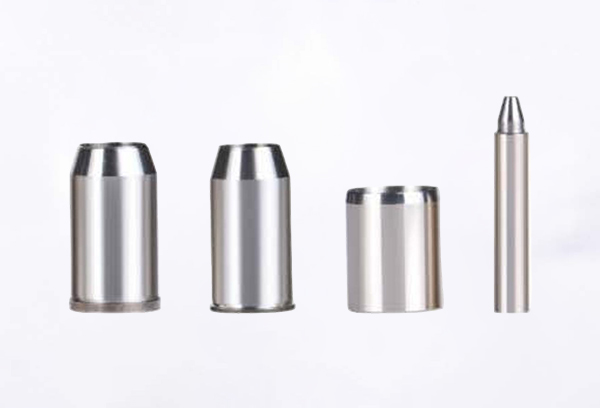
In the context of the continuous improvement of machining accuracy and stability requirements in the precision manufacturing industry, the mirror spring hole series is widely used in die-cutting and stamping processes in electronics, automobiles, packaging and other fields with its core advantages of high finish and high sharpness. How to choose the right mirror spring hole products according to your own production needs has become a key link to improve production efficiency and ensure product quality. Industry experts combined product characteristics and application practices to sort out four core selection dimensions to provide scientific reference for enterprises.
1. Core performance parameter matching: precise docking of processing needs
The performance parameters of mirror spring holes directly determine the machining effect, and the selection should give priority to clarifying the adaptability of core indicators. In terms of surface accuracy, the corresponding roughness level should be selected according to the surface requirements of the processed material, usually precision electronic component processing needs to choose products with lower surface roughness to avoid scratching the surface of the workpiece, while ordinary industrial component processing can appropriately relax the requirements to achieve a balance between accuracy and cost. For the processing of composite materials and high-strength materials, it is necessary to choose products with higher hardness to ensure impact resistance and wear resistance; For single soft material processing, you can choose to adapt to the hardness level to avoid excessive pursuit of high hardness and increase costs.
Dimensional tolerance control is also important, and it is necessary to combine the requirements of mold assembly accuracy, select products with tolerance ranges that meet the assembly requirements, ensure accurate adaptation with tool templates, springs and other components, and avoid affecting the stability of mold operation due to dimensional deviations. The hole size and length specifications should be comprehensively determined according to the thickness of the processing material and the punching stroke, and it is generally recommended that the hole size specification form an adaptation relationship with the thickness and punching force of the processed material, and the length needs to meet the needs of mold assembly space and elastic reset.
2. Application scenarios and processing material adaptation: targeted selection of schemes
There are significant differences in the demand for mirror spring holes in different application scenarios and processing materials, and targeted selection is required. In the processing of flexible circuit boards and micro sensors in the electronics industry, since most of the products are ultra-thin and high-precision components, and often involve composite materials, products with high finish and high sharpness should be selected to ensure that the material is not damaged or burred during the punching process, and to meet the needs of precision die-cutting process.
In the production of auto parts, for the processing of gaskets, rubber parts, and other materials, it is necessary to choose products with better wear resistance and fatigue resistance to meet the needs of high-frequency punching and cutting in mass production. For paper and plastic film processing in the packaging industry, you can choose a more versatile model according to the thickness and hardness of the material, so as to ensure the processing quality and control the cost. In special environments, such as wet and corrosive conditions, it is necessary to choose materials with anti-rust and corrosion resistance characteristics to improve product adaptability and extend service life through surface treatment processes.
3. Structural design and process compatibility: ensure operational stability
The structural design of mirror spring holes should be well compatible with their own production process and mold structure. From the structural point of view, products with small holes reserved at the bottom can reduce the risk of deformation in the punching process, improve the uniformity of force, and are suitable for high-frequency and high-intensity punching scenarios; Conventional structural products are suitable for ordinary working conditions to meet the needs of basic processing.
In terms of process compatibility, it is necessary to select products based on the performance parameters of their own processing equipment to ensure that the installation method, size specifications of the mirror spring hole are consistent with the equipment requirements, and avoid problems such as installation lag and poor operation. For high-speed punching and cutting equipment, products with good rebound performance and strong structural stability should be selected to adapt to the operating speed of the equipment and ensure the smoothness of continuous production. At the same time, it is necessary to consider the maintenance convenience of the mold, choose products that are easy to disassemble and assemble, and easy to replace to reduce later maintenance costs.
4. Comprehensive cost and quality assurance: achieve cost-effective balance
In the selection process, it is necessary to take into account the initial procurement cost and the long-term use cost to avoid cost waste caused by blindly pursuing high parameters. On the premise of meeting processing needs, priority is given to cost-effective products, and for mass production enterprises, they can communicate with suppliers to achieve precise adaptation in specifications and performance, and obtain better procurement conditions.
Quality assurance is an important prerequisite for selection, and suppliers with mature production technology and perfect quality control systems should be selected, and the products must undergo strict performance testing to ensure that dimensional accuracy, hardness, surface quality and other indicators meet the application requirements. Supplier strength can be evaluated by viewing product test reports and understanding industry reputation to avoid affecting production progress due to product quality problems. In addition, the supplier's technical support capabilities are also worth paying attention to, and high-quality technical services can provide professional guidance in selection, installation, commissioning and other links to help enterprises quickly solve practical problems.
Industry experts said that the core of the selection of mirror spring holes lies in "precise adaptation", and enterprises need to combine their own processing materials, equipment conditions, product precision requirements and other factors to comprehensively consider, not blindly pursue high parameters, and do not ignore key performance indicators. With the continuous development of precision manufacturing technology, mirror spring hole products will continue to be optimized in terms of performance and structure, providing enterprises with more adaptation options. In the future, collaborative innovation in the upstream and downstream of the industrial chain will further promote the standardization and precision of selection and help improve the overall efficiency of the industry.
 Service Hotline:138-0226-6823