



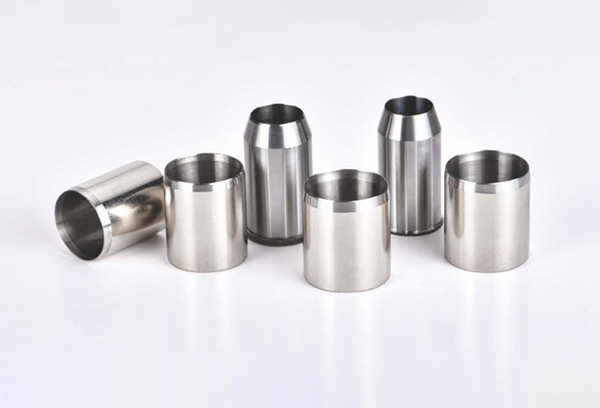
In die-cutting industries such as electronics, self-adhesive, and precision materials, mirror spring holes, as the core components for precise punching and automatic waste discharge, directly determine the quality of product punching, mold life, and production efficiency. In the face of a variety of apertures, heights, steps and cutting edge specifications on the market, how to scientifically match their own product characteristics has become the focus of attention of many enterprises.
Precise positioning of core specifications, four major parameters to set the foundation
1. Knife edge diameter: match the punching size of the product, precision is paramount
The diameter of the knife edge is the primary parameter of selection, and it is necessary to strictly correspond to the size of the round hole required by the product. At present, the diameter of the mirror spring hole cutter edge on the market covers 1.0mm-12.0mm, and the conventional specifications are incremented by 0.1mm (such as 1.1mm, 1.2mm...... 7.9mm), and above 8.0mm are mostly integer + 0.5mm specifications (such as 8.5mm, 9.5mm).
Precision electronic components, FPCs, and thin film products: Preferential selection of 1.0mm-5.0mm small diameter specifications, with tolerances controlled within ±0.1mm, ensures round hole roundness and burr-free punching.
Self-adhesive labels, blisters, rubber products: 3.0mm-8.0mm regular diameter is available, suitable for most medium and large round hole needs.
Thick cardboard, automotive gaskets and other products: 8.0mm-12.0mm large diameter specifications can be selected to meet the requirements of large-size punching.
2. Total height: adapt to the thickness of the cutter die, industry standard preferred
The total height of the mirror spring hole is 23.8mm as the industry standard, and it is suitable for more than 95% of conventional knife templates. A few special thin knife dies can be selected with 23.6mm non-standard specifications. When selecting, it is necessary to confirm the thickness of the knife plate, the total height must be exactly matched with the knife die, and the height tolerance should be controlled within the range of 0~+0.05mm to avoid breaking the material too high and too low to punch in place.
3. Step height: Determine the smoothness of waste discharge and match according to the thickness of the material
The step height (ejector height) is the key to spring ejection of waste, which directly affects the automatic waste discharge effect, and needs to be accurately selected according to the thickness of the punching material:
Thin materials (0.03mm-0.3mm): such as release paper, PET film, label paper, choose short steps (0.5mm-1.0mm) to prevent the top material from damaging the product too deeply.
Medium-sized materials (0.3mm-1.0mm): such as foam, EVA, silicone, select steps (1.0mm-1.5mm) to balance the loading force and waste discharge stability.
Thick materials (1.0mm-2.0mm): such as PC hard sheets, composite plates, rubber pads, choose long steps (1.5mm-2.5mm) to ensure that the waste material is completely ejected and avoid jamming.
4. Cutting edge type: adapt to the soft and hard materials to ensure the quality of punching and cutting
Straight cutting edge: general-purpose, suitable for soft, thin, neutral materials (self-adhesive, film, foam), stable punching, moderate cost, suitable for most conventional scenarios.
Oblique cutting edge: precision type, suitable for hard, thick, high-toughness materials (PC, PVC, red steel paper, automotive sealing gaskets), higher sharpness, punching without burrs, not easy to chip, suitable for high-end precision products.
Accurate matching of material attributes, selection guide for different materials
The core advantages of mirror spring holes are HRC58° high hardness, mirror grinding sharpness, and super impact resistance, which are suitable for various materials below 2mm, but need to be refined in combination with material characteristics:
Electronic films (FPC, PCB, release film): thin materials, high precision requirements, choose small diameter (1.0mm-3.0mm) + short step + straight edge mirror spring hole to ensure smooth incision, no burrs, and no damage to the substrate.
Foam silicone (EVA, silicone, sponge): the material is soft and easy to stick, and the diameter + long step + straight cutting edge is selected to enhance the loading force and avoid waste sticking and jamming.
Rigid plastics (PC, PET, PP thick sheets): the material is hard and tough, selected / large diameter + long step + oblique cutting edge, using high sharpness and hardness, easy punching without pressure, and extending the life of the mold.
Composite multi-layer materials: complex structure and uneven thickness, choose high-hardness mirror model + long steps to give priority to ensuring smooth waste discharge and reducing waste residue and delamination problems.
Selection and pit avoidance guidelines: five common misunderstandings to avoid
Only look at the aperture and not the steps: thin materials are easy to top and break the product with long steps, and thick materials are easy to jam waste with short steps, and the step height must be matched according to the thickness of the material.
Blindly choose large diameter: large diameter spring holes are used for small bore products, which wastes costs and reduces accuracy, and the hole diameter needs to strictly match the punching size of the product.
Neglecting height tolerances: Height mismatches lead to abnormal tool die assembly and varying punching depths, so be sure to confirm the 23.8mm standard height or custom non-standard specifications.
Ordinary spring holes instead of mirror models: Ordinary spring holes are used for precision products, which are prone to burrs, blackening, and short life, and high-end scenes must choose mirror models.
Ignoring material adaptation: Straight edges for hard materials and oblique edges for soft materials can easily lead to chipping and weak punching, and the type of edge needs to correspond to the soft and hard of the material.
Expert advice: three-step quick selection method
Size: Cutter edge diameter = product round hole size, total height priority 23.8mm.
Fixed steps: step height ≈ material thickness × 1.5-2 times.
Fixed cutting edge: choose a straight edge for soft and thin materials, and choose an oblique edge for hard and thick materials.
Conclusion: Although the mirror spring hole is small, it is the "key throat" of die-cutting production. Precise selection can not only improve product quality and reduce failures, but also reduce procurement costs and extend mold life. When selecting a company, it is necessary to combine the three cores of product size, material thickness, and material characteristics, follow the principle of "accurate size, step adaptation, and cutting edge correspondence", and contact suppliers to customize non-standard specifications when necessary to achieve both production efficiency and product quality improvement.
 Service Hotline:138-0226-6823